


5 Tips To Convince Your Spouse to RV Full Time
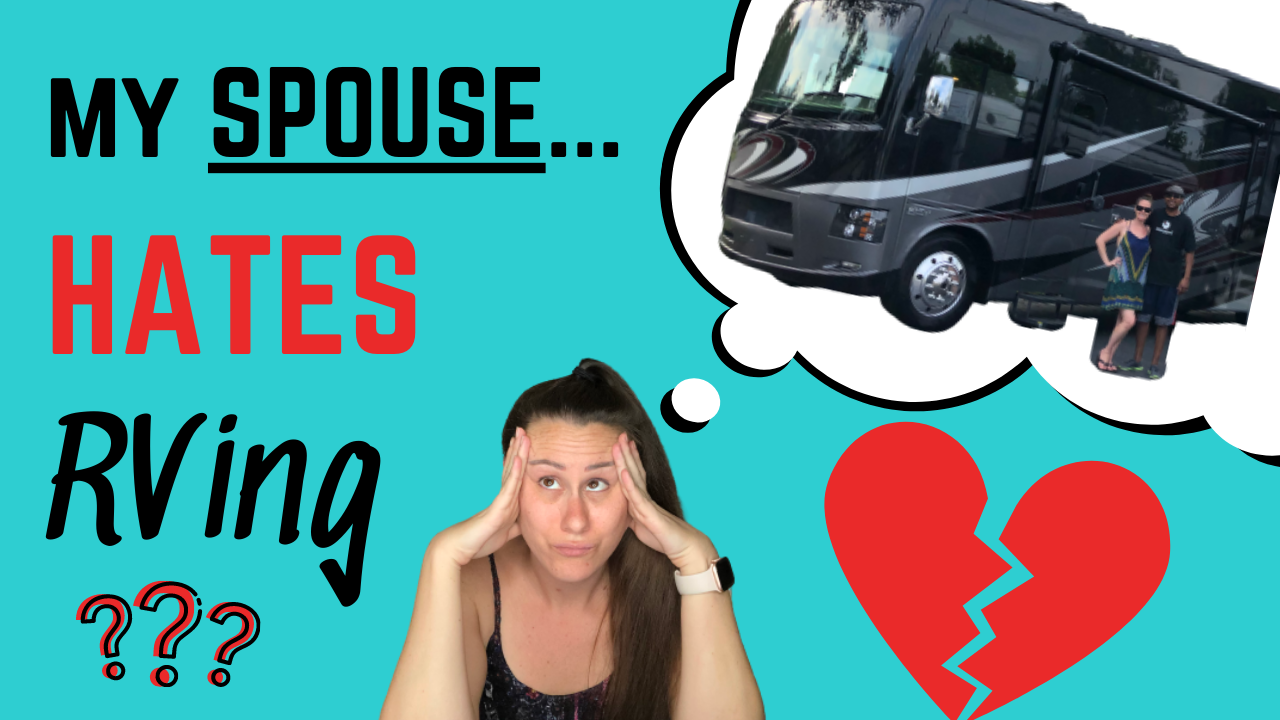
What do you do if you want to RV and your significant other doesn’t want to? How do you convince your spouse to go RVing with you? Especially, if you want them to go RVing full time? This is a very common problem to have. And one of the biggest questions I get asked is “Brandi, how do I get my husband to go RVing with me or my wife, boyfriend, girlfriend to RV with me? They don’t want to go!” So, in this post, I’m going to give you five ways that you can convince your spouse to go RV with you full time.
Personally I’ve struggled with this for at least five years. I sold my condo and bought and RV. BUT My boyfriend still has a condo and doesn’t full-time RV. However, I’m gonna tell you how I’ve managed to make it work! These are five ways that you can convince your significant other to come on over to RV life (maybe even full time)
✅ Tip 1 – Convincing Your Spouse to RV by Starting With the Right RV
So, the first way that you can convince your spouse to RV full time with you is to rent an RV or buy the right RV.
Renting an RV may be more expensive than buying one in the beginning, but you’re able to try out different types and sizes of RVs. If you rent them without actually purchasing the RV and dealing with all of the things that come along with owning and maintaining one, you just pick it up and go.
Or, of course, you can buy “the right” RV.
My RV Journey (and What Went Wrong)
When I started RVing, one of the reasons my boyfriend probably didn’t like the idea of RVing had to do with the type of lifestyle and RV I had chosen.
My first RV was a travel trailer. We had to do a lot of towing, it was expensive, and there was a lot of setup involved. Plus, when I bought my travel trailer, I didn’t know that you needed a generator to have electricity—or pretty much what an RV even was. I didn’t really understand what I had bought or what it was capable of.
Within the first six months of purchasing my travel trailer, I got into a horrible accident and lost my trailer. I totaled my travel trailer and my tow car, so I was really starting over from scratch—and it wasn’t fun for anyone.
To sum it up: my first travel trailer was just a nightmare in general to set up, and it was new (which came with A LOT of newbie issues).
From a Travel Trailer To Van Life
After my travel trailer accident, I bought a brand-new 2016 Mercedes Sprinter Van, which ended up having so many issues that it turned out to be a lemon.
I worked something out with the manufacturer and dealership to do a collateral swap and ended up with a 2018 Mercedes Sprinter Van. It was a trade-off with slightly different technology, so hopefully, it wouldn’t have the same issues as the year prior.
It was an upgrade… but here’s the problem:
We were trying to fit three dogs, two adults, and run two businesses from this van.
That turned into another nightmare!
We didn’t have an extra car if we parked and set up, so we had to buy a second car. Then, we had to buy a trailer to tow that car. Then we had to strap things down—it was all more work.
(And then, someone stole my trailer.)
Finally Finding the Right Fit
My van life experience ultimately led me to the motorhome that I have now.
I don’t have to tow anymore, my smart car goes inside, and our life is super easy! We don’t have a lot of setup, we don’t have to do much, and we can live in the RV for at least a week (or longer) without connecting to external power or a water supply.
Another Way to Find the Right RV
Another option for finding an RV you and your spouse would enjoy is to go to an RV show or dealership so you can look around at all the different amenities.
You’ll get to:
- See the different types and sizes of RVs
- Lay in the beds
- Get a feel for what it would be like
You’ll need to decide:
Do you want all kinds of fancy features in the RV or not?
All of these things play a role in your comfort level while RVing.
When I bought my RV, I chose it for my comfort level, as well as my lifestyle needs and budget. But most importantly, I wanted to be comfortable—because I was buying a home, not just a weekend camper or hotel getaway.
✅ Tip 2 – Try Stationary RV Living With Your Spouse
The second way to convince your spouse to go RV full-time is to try stationary RV living.
That means living in an RV park or staying put somewhere on land—maybe boondocking—but not moving around constantly.
Because let’s be honest: moving in an RV 24/7 can make it really hard when you’re first getting started.
Trying to work, get anything done in your life, or even on the actual RV itself can be overwhelming while you’re on the move. Plus, you’re learning about this new RV and adjusting to this lifestyle, so you don’t want to be constantly moving.
You’ll want to stay stationary so you can:
- Learn about the RV and how it works
- Settle into this new lifestyle
- Actually enjoy the places you visit instead of just passing through
What I Learned From Stationary RV Life
When I started living stationary in my RV, I actually learned more about my RV than I ever knew before.
I’ve developed a totally different philosophy about how I go out into the RV world now.
I’ve been stationary for probably about a year—this started when COVID hit. But before that, I was traveling 24/7 with different RVs.
Stationary RV living actually allowed my spouse (my looooooong-term boyfriend) to enjoy the RV life and adapt to it a lot more.
Start Close to Home
Try finding an RV park that’s close to your home so that you can get the hang of things.
Maybe it could be your second home or a little getaway spot until you decide to dive into full time RV life.
Or, if you have space in your yard, you could use your RV at home. Hook it up, run power and water, and at least practice some of the things you might do out on the road—even if it’s just camping in your backyard.
It’s a great way to get the hang of things before actually venturing out full-time.
How I Made Stationary RV Life Work
When I mentioned finding a place close to home, here’s what I mean:
When COVID happened, I settled down in my RV about an hour and a half to an hour and 45 minutes (sometimes two hours) from the condo or my boyfriend’s house.
I’m also in between family, right off a main interstate, so I can go where I need to go.
But here’s the best part: I’m on a beautiful lake.
It’s kind of like a getaway. We call it “the lake house,” but really, it’s Brandi’s house.
My boyfriend comes out a lot—sometimes he’ll stay for two weeks, then go home for a few days or a week, and then come back.
Balancing City Life & RV Life
Sometimes I’ll venture into the city—back to what I jokingly call “foreign land,” or normal life—and then I’m in a hurry to get back to my RV! LOL
But I do try to make sacrifices. I put a smile on my face, go into the city, and enjoy the condo every once in a while, because he makes the effort to come and enjoy my RV life.
So, it is a little different, but having a stationary RV and setup has allowed me to do that—to balance both worlds.
Key takeaway: Stationary RV living makes it easier for your spouse to adjust before jumping into full-time travel
✅ Tip 3 – Go on Shorter Trips or Mini Vacations
Another way that you can convince your spouse to go RV full-time with you is to go on shorter trips or mini vacations.
Whether you take your spouse RVing for a weekend, a week, or a little longer, it can make a huge difference in whether they’ll actually enjoy this life—because let’s face it: RV life is different!
It is not “normal.”
Learning to live, experience, and adjust to RV life in smaller doses will probably make the process go a lot smoother.
Start Small (and Be Patient)
I suggest starting with shorter trips—like:
- Mini vacations
- Weekend trips
- A week-long getaway
Not month-long expeditions and excursions (away from “this normal life” you have right now with your spouse) right off the bat. Take it slow!
Why? Because it’s going to take time for your spouse to adjust.
As much as you might be excited to dive headfirst into RV life, they may not be nearly as enthusiastic.
And let’s be honest: some people get weirded out by things like pulling the “poo levers,” emptying the sewer tanks, or hooking up at RV parks. That takes time (and patience) to get used to.
The Setup Struggle
Keep in mind: If you decide to do shorter or mini vacations, you’ll be setting up and taking down your RV a lot more often.
That can make things more stressful.
For example: If you’re just doing a weekend trip and you have to set up a whole trailer, hook up power, water, and sewer, and you’re only there for two days… that’s not exactly fun.
That’s why I have personal rules when I travel:
We stay a minimum of 2–3 days before moving again.
I don’t want to go through the hassle of connecting and disconnecting (my water, power and sewer etc…) everything over and over and over again unless I’m actually settling down for a bit.
How the Type of RV Changes Things
When I had a travel trailer, it was a lot more work than when I had a van.
But the van came with smaller tanks, which meant we couldn’t go as long between dump stops or refills. Then we had to deal with a Smart car and a trailer, which added even more hassle.
Until I got my motorhome.
That’s when my life changed for the better—because it finally fit our lifestyle and our needs.
Key takeaway: Mini trips help your spouse ease into RV life without overwhelming them
✅ Tip 4 – Go Alone (Yes, Without Your Spouse!)
The fourth way that you can convince your spouse to go RVing with you—or even go full-time—is a little bit different: go alone.
Yes! Go RVing without your spouse!
It may seem scary, weird, and maybe a little lonely to leave your poor spouse (boyfriend, girlfriend, wife, or husband) behind… but you should not be bound to a landlocked life!
Why Going Solo Can Actually Help
If you have the resources to take off on an RV trip of your own—maybe for a weekend, a week, or even just a mini vacation—it might be a good idea.
Why? Because then your spouse will start to miss you.
You know that saying: “Absence makes the heart grow fonder.” It’s true.
When you’re away, they start to miss you more. And that longing is way different than when you’re with them 24/7 in a small space like an RV. You’ve got to give your spouse time to get used to being with you like that.
Make Them Want to Join You
If you go out and do your own thing, your spouse will see you having all this fun—going to the beach, exploring new destinations, meeting new people—and they’ll start thinking:
“I want to do that!”
Go out, do your own thing, and they will follow!
And if they don’t? At least you’re still having your own fun.
You Don’t Need Your Spouse to RV
You don’t have to have a spouse along to make RVing a great experience.
If you really want to get into this lifestyle, try it alone, go do your own thing, and hopefully, your spouse will eventually join you.
How I Did It (My Florida RV Routine)
Personally, I’ve even made sacrifices in my own relationship.
When I first got my motorhome, I would park the RV in Florida. I had a Thousand Trails camping membership I could use for two weeks at a time. So I would:
- Go to an RV park and stay there for two weeks.
- Put the RV in storage for a week.
- Go back home (to the condo).
Then I’d come back, get the RV out of storage, and hook back up at another park.
Some of this had to do with the TT membership and how it worked—it was free with my motorhome purchase—so I decided to take advantage of it since I was camping for free. The only thing I was paying for was storage.
Balancing Distance & Relationships
But here’s the thing: when I parked my RV in Florida, it was four to six hours away from my boyfriend.
So, I’d have to drive back to see him, family, or friends.
Instead of moving the RV every time, I’d just leave it at the park or in storage and drive my Smart car back and forth.
✅ Tip 5 – Be the RV Expert
So my fifth way to convince your spouse to go RV with you full-time is to “be the RV expert.”
Don’t make them have to learn everything.
You want to know everything you can about the RV.
Learn the Ins and Outs
Take the time to learn about:
- How to drive the RV
- The RV parks you’re going to visit
- The roads you’ll be traveling on
- Your destinations: What is there to do around there? Where can you go eat (and park the RV if needed)?
Make RV Living Easy for Your Spouse
Make the idea of RV living super easy for your spouse.
This includes being knowledgeable about:
- RV maintenance
- Emergency contacts (i.e., AAA or roadside assistance)
- Who to call if the RV breaks down or you have an issue
I’ve joined RV-related Facebook groups, invested in RV maintenance service providers that will either give technical help over the phone or come out and service the RV wherever we are.
I pay for that and have spent a lot of time creating my own system for handling RV issues as they’ve unfolded.
Reduce the Stress
I try to make sure that I have all the numbers and necessary information in case we are ever stranded and need help.
I didn’t want (and still don’t want) it to be stressful on my spouse.
It causes problems when you have issues and neither person knows what to do.
But if you’re like:
“Hey, don’t worry. I got this. I know what to do.”
…it makes things a lot less stressful for your spouse.
Educate Yourself First
Watch YouTube videos.
Learn everything you can about:
- Your RV
- The RV lifestyle
- The places you’re headed
Before you head out.
Make the RV Feel Like Home
Also, make your RV life feel just like home—or work—however you plan to use it.
Especially if you’re taking your office on the road:
- Make sure the internet is working
- Have your office set up (printer, paper, etc.)
In the kitchen, stock it with:
- Utensils
- Food
- Anything else you’d have at home
No one wants to knowingly add more stress to their life.
Take the Burden Off Your Spouse
If you want to take the burden off of your spouse in this new lifestyle, the best way to do that is to make it feel like home.
You’re asking them to come over to this new life—to change their lifestyle—so you really don’t want it to be stressful.
Let me repeat: you don’t want them to feel like they’re diving into an extremely stressful, chaotic life.
So: be the RV expert and make it easy for them.
🎬 Watch The Video
What’s Next?
Now, you know, five ways that you can convince your spouse to go RVing with you (maybe even full time)
Let’s review:
- TIP 1 – Rent an RV or Buy “The Right” RV
- Tip 2 – Try Stationary RV Living
- Tip 3 – Go on Shorter Trips or Mini Vacations
- Tip 4 – Go RVing Alone
- Tip 5 – Be the RV Expert
When I started RV life, I had no idea what I was diving into. I wasn’t even sure if my boyfriend was going to come along with me! So, I know exactly what you feel like and what it feels like to go through this process. My RV life turned into something way bigger than I ever could have imagined, which is why I say just “do you boo”, embark on your dreams, and they will follow!
TRUST me, I know it can be scary getting started so if you want someone to guide you, you want community and support and help planning and preparing and getting your RV life started, then you can JOIN RVersity and I will help show you the way! We can talk about what kind of RV life you want to have and start planning your RV life (whether your spouse wants to come or not).
Related:
- VIDEO – WHY I Live Full Time in an RV (MY STORY)
- [BEGINNERS GUIDE] How To Prepare For Full Time RV Living – WATCH
- VIDEO – Top 10 RV NEWBIE MISTAKES TO AVOID as a Beginner RV Living!
- VIDEO – Solo Female RV Living: How It Helped Me HEAL!
- 10 Reasons I LOVE Solo RV Living Alone as a Female
Don’t Miss A Thing…
📫 Sign Up To Receive the RV Newsletter!
🚐 Follow @RVersity via Facebook, Instagram, and Pinterest.
😍 LOVE this content — Buy Me A Coffee & Say Thanks!