
Wondering how to rent an RV for vacation or what the actual RV rental cost is? Whether you’re interested in a cozy camper van rental, a spacious motorhome rental, or a convenient travel trailer rental, this guide breaks down everything you need to know about renting an RV—from types of RVs to where to rent one and how much it really costs.
If you’ve been asking, “Where can I rent an RV?” or “How much does it cost to rent an RV?”, you’re not alone! With popular platforms like Cruise America, Outdoorsy, and RVshare, there are more options than ever to book your perfect RV vacation rental.
In this post, I’ll walk you through how to rent an RV, the different types available (including camper vans, travel trailers, and motorhomes), and tips to help you get the most for your money. Whether you’re planning a weekend getaway or a cross-country road trip, this is your go-to guide for understanding the cost to rent an RV and finding the best RV rental for your adventure.
PS I even made you a video (below) to go along with this blog post about renting an RV.
How to Rent an RV: Everything You Need to Know Before Your Trip 🚐
Hey, I’m Blogging Brandi—and welcome to RVersity, a university for RVers! In this guide, I’m going to teach you how to rent an RV. Be sure to read all the way to the end so you don’t miss my top recommendation for finding your perfect RV rental for your next adventure or vacation.
🚍 Types of RVs You Can Rent
There are two main types of RVs you can rent:
1. Motorized RVs (Drivable Units)
These are the kinds of RVs you drive, like the one I’m in now. I’m sitting on the couch, my fridge is nearby, there’s a stove and bathroom in the back—everything is built-in. If you haven’t seen the tour of my RV, check it out in the description below.
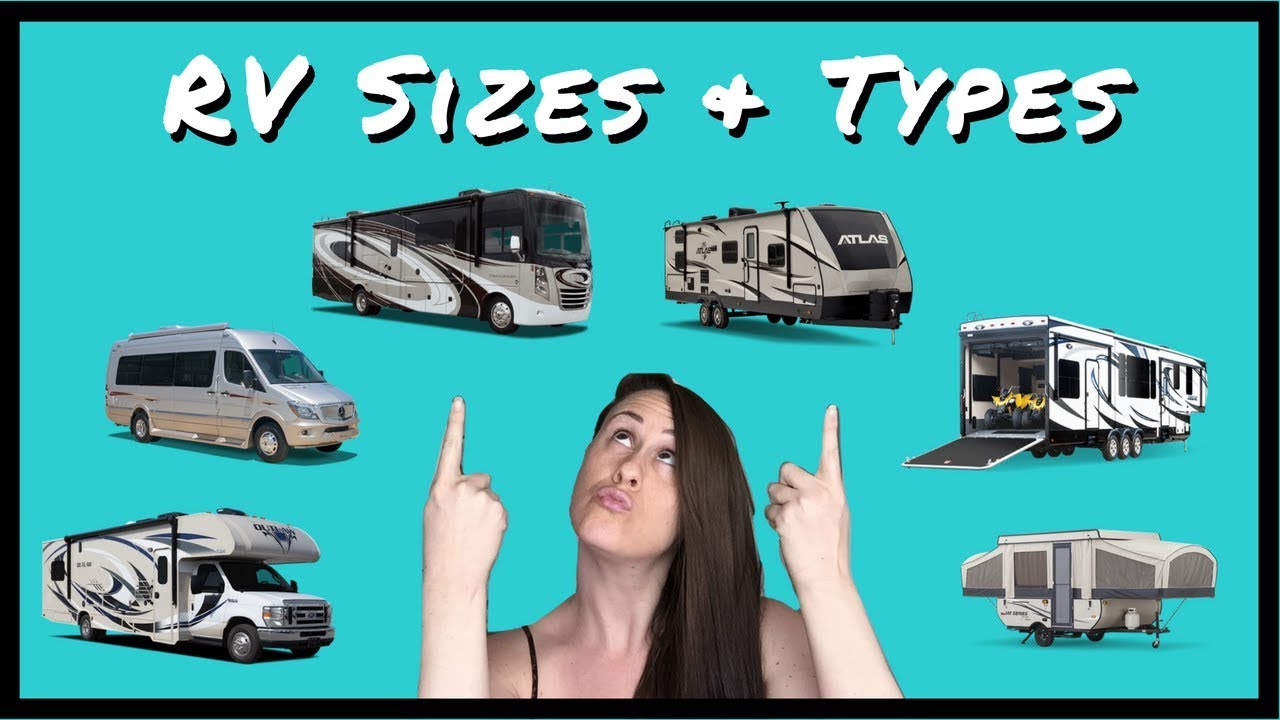
Motorized RVs (aka motorhomes) come in three classes:
Class A = RV Motorhome
Class A RVs are the big bus-style rigs that can sleep anywhere from 4 to 10+ people. They’re usually the most spacious, luxurious, and expensive.

>> Take a tour of my 2018 Thor Outlaw 37RB Class A Motorhome Toy Hauler With a Garage
Class B = Camper Van
Class B RVs are more like a camper van. We’re in a Class B now, and it’s built for two people. Some might say they can sleep 2–6, but that depends on the layout.

🚐 TAKE A TOUR OF MY RVS: F.Y.I – These two models are very similar, but have many unique differences as well. The Winnebago ERA 170C model was replaced with the Winnebago ERA 170M. I owned both. the first RV turned out to be a lemon, and I did a collateral swap!
- My 1st RV Van = 2016 Winnebago ERA 170C – Class B Diesel Camper Van (TOUR)
- My 2nd RV Van = 2018 Winnebago ERA 170M – Class B Diesel Camper Van (TOUR)
- My 3rd RV Van = 2012 Pleasure Way Excel-TS – Class B Gas Camper Van (TOUR)
Class C
When you think Class C RV, these are the RVs with the overhang above the cab in the front over the driver and passenger seat. They fall between Class A and B in size and can sleep 4–10 people depending on the layout. I always say these are the old school — look at me I’m in an RV type rigs.
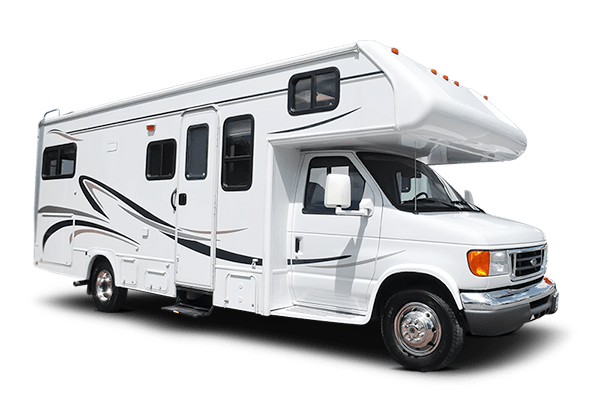
⚠️ Just because an RV is larger doesn’t always mean it can sleep more people. Always double-check the floorplan and sleeping arrangements before you book.
>> What is a Class C RV – TAKE A TOUR and see!
2. Towable RVs: Travel Trailers, Fifth Wheels, and More
Towable RVs don’t have engines—you’ll need a separate tow vehicle, like a truck or SUV, to pull them. The big advantage? Once you’re set up at your campsite, your vehicle is free to explore without having to pack up your whole RV.
Here are the most common types of towable RVs:
🚙 Travel Trailers
- Also called bumper pull trailers, these are the most popular type of towable RV.
- They attach to a standard hitch on the back of your vehicle.
- Sizes vary from tiny teardrop trailers to large 30+ foot models.
- They often include a bathroom, kitchen, sleeping areas, and slide-outs for extra space.

>> Take a tour of my Travel Trailer
🛻 Fifth Wheels (5th Wheels)
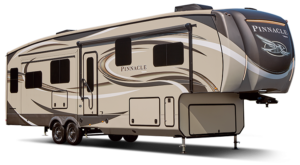
- These are the largest and most luxurious towables.
- They attach using a special hitch in the bed of a pickup truck (not the bumper).
- Fifth wheels often have multi-level layouts, full-size kitchens, and residential-style features.
- Due to their size and hitch style, they offer better stability and towing control, but they do require a heavy-duty truck.
🚐 Pop-Up Campers (Folding Campers)
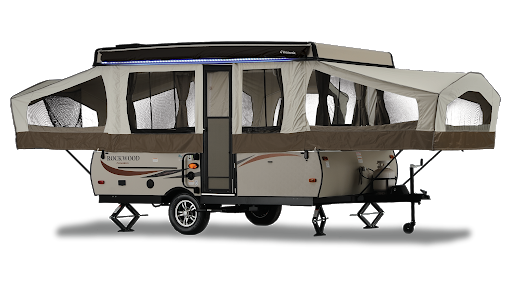
- Lightweight and compact—perfect for smaller vehicles.
- These fold down for travel and “pop up” when you’re ready to camp.
- Usually have canvas sides, basic beds, a small sink or kitchenette, and sometimes even a toilet.
- Great for weekend trips, but not ideal for extended stays or cold weather.
🛻 Toy Haulers
- A mix of an RV and a garage.
- Available as both travel trailers and fifth wheels. (They also make them in Motorhomes too!)
- Designed to haul ATVs, motorcycles, or other toys, with a ramp door in the back.
- The garage space often converts into a living area or extra sleeping space.
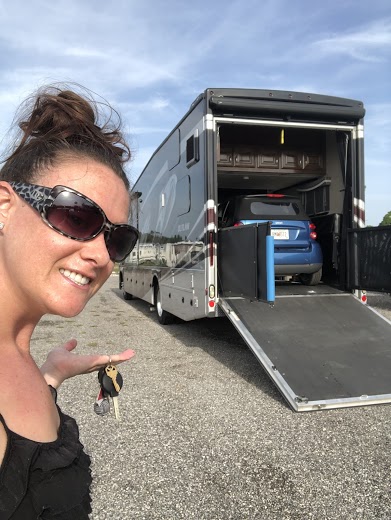
>> Watch: How I Load My Smart Car In My Toy-Hauler (Motorhome with a Garage)
🛏 Teardrop Trailers
- Tiny, ultra-lightweight campers shaped like—you guessed it—a teardrop.
- Basic sleeping quarters with minimal features (sometimes just a bed and an outdoor-access kitchen in the back).
- Easy to tow with smaller vehicles and perfect for minimalist camping.
💡 Pro Tip: Always check your vehicle’s towing capacity before choosing a towable RV. Not all SUVs or trucks can handle heavy trailers or fifth wheels.
❓How to Choose the Right RV for Your Trip
When it comes to picking an RV, it depends on the number of people that are going to be traveling with you and the number of seats, and the number of beds you will need. How much room do you need to have?
To choose the right RV, ask yourself:
- Where are you going?
- How big is your group?
- What’s your budget?
Planning ahead is key. Trust me—last-minute RV rentals can get costly and stressful.
🛣️ Step 1: Plan Your Drive
RV travel isn’t the same as driving a car. Here’s what you’ll need to consider:
- RV height & weight: Low bridges, narrow streets, and restricted roads may not be RV-friendly.
- Mileage: Most rentals give you 100–150 miles per day. Anything over that, and you’ll pay extra.
🛑 Step 2: Plan Where You’ll Stay
Where are you going to park and sleep?
Option 1: RV Parks or Campgrounds
For beginners, I recommend a full-hookup campground like a KOA. These places usually include:
- Water
- Electricity
- Sewer hookups
- Wi-Fi and/or cable (sometimes)
💡 Tip: Expect to pay $25–$100+ per night. Weekly and monthly rates are cheaper, even if you don’t stay the whole time.
>> FAQ:
- What are RV Hook-Ups (Explained)
- Best Websites To Find RV Parks & Campgrounds
- Ultimate List of Mobile Apps to Find RV Parks
- How To Find And Book RV Parks + Campgrounds
Option 2: Boondocking (aka Dry Camping)
Want to skip the RV park? If you don’t want to hook up, you can always go the Boondocking route or dry camping, as they call it — essentially, you are camping without hookups — just you and nature or sleeping in a parking lot somewhere.
>> What is Boondocking (dry camping) explained…
>> Where to Find Free RV Parking and Camping Spots
🛏️ Step 3: Choose Your RV Amenities
When it comes to choosing the right RV to rent next, you’ll want to think about things like your amenities. How much room do you want on the inside?
In your RV kitchen, do you want a stove, cooktop, or microwave? Do you want a full fridge/freezer or will a mini-fridge do?
And then there is your RV bedroom. What size bed do you need? Will bunk beds do? Are you okay with having to put the bed up and down to use it every day? Keep in mind some RVs require the slide out to be extended in order to sleep or use some of the amenities. And some RVs “beds” are not full size or they are converted tables, couches, etc..
You can also choose the option to have a full bath, full shower with a sink, toilet, and shower. But in some RVs, like most camper vans, sometimes your shower and toilet are combined. In fact, in one of RV Vans we always take showers at the RV Park or Gyms since the shower and toilet are set up like this! Yet, my first RV van had a full size RV bathroom in it!
Think about what features matter most to you:
- Slide-outs for extra room?
- Full-size or mini kitchen? (Fridge, freezer, stove, microwave?)
- Bathroom setup? Some RVs have wet baths (shower & toilet in one), others have full-size separate bathrooms.
- Sleeping space? Bunk beds for kids, queen beds for couples, convertible couches, etc.
💵 How Much Does It Cost to Rent an RV?
If you’re next question is: How much does it cost to rent an RV? It depends on the type of RV, how old it is, and how long you’re going to be renting it for. Keep in mind the prices can be a lot cheaper if you rent them for a week vs a month. Or during the week vs over the weekend.
If I wanted to get a better discount, I might weigh out the options. You can save anywhere from 10-50% off of what the daily rate is by renting your RV for a longer period of time. On the flip side, there’s actually a minimum for most of the RV rentals that you have to rent them for typically two to three days.
Another thing to think about is when you’re renting an RV is when you’re traveling! If you’re renting in July or August, that’s peak season for people to be traveling and going on vacations, so it’s probably going to cost you a heck of a lot more to rent an RV at that time.
RV rental costs vary by:
- Type and class of RV
- Rental duration (longer = cheaper per day)
- Age/condition of the RV
- Time of year (peak season = higher prices)
- Cost per night: $100-450 and up!
- You can save 10–50% by renting weekly or monthly.
- Most rentals also have a 2–3 day minimum.
💸 Extra Rental Fees You Should Expect
Some other things that you can expect to pay in the cost of your RV Rentals are a deposit, insurance, taxes, etc…
Here are some common hidden costs:
1. Deposits
As far as the deposit goes, they’re going to probably ask you for a card to put for your reservation to reserve the RV, then whenever you rent the RV, they’re going to want something like a liability and damages type deposit. This can be anywhere from $300-$1000 or more that they’re going to want to hold on your card in case something happens. This will normally be refunded to you after your trip.
- Reservation deposit (to hold your rental)
- Damage deposit ($300–$1,000+), refundable if nothing breaks
2. RV Insurance
Next, think about RV insurance. Usually, check with your car insurance company and say, Hey, will you cover me if something happens whenever I rent this RV, You probably want to call and find out and ask them a couple of questions. Find out what all they cover, and then whenever it comes time to rent the RV, the rental company might ask you to sign some type of liability waiver saying, yes, I have my own insurance.
But, if your car insurance company doesn’t cover your RV Rental, then you’re going to want to pay for RV insurance from the RV facility where you’re renting.
- Check with your auto insurance company to see if they’ll cover RV rentals
- If not, you’ll need to buy insurance from the RV rental provider ($25–$45/day)
3. Taxes
Then you’re going to have to pay taxes, so don’t forget everywhere there are taxes to have to be factored in. It may be something that they can tell you up front or it may be something you’re just going to have to think. Okay, I’m going to have to pay a percentage of taxes.
- Don’t forget: rental taxes apply just like hotels or car rentals.
4. Mileage Overages
They also usually give you some type of mileage limit. Typically, they give you about 100 to 150 miles a day when you rent the RV, and then if you go over that, you have to pay excess fees for the additional mileage.
- If you go over the mileage limit, expect to pay per mile. Typically allowed 100-150 miles per day.
5. Generator Usage
- If you use the generator, they calculate the hours. You are given 4 hours daily and pay for excess usage usually.
>> Learn 30 Ways To Save Money While RV Living! 💰
⛽ Fuel & Generator Costs
You’re going to need fuel for driving and fuel for using your RV. (i.e. Gas, Diesel, Propane) — Of course, if you use all of the propane, gas, or diesel you’re probably going to have to refill it or at least pay for the cost of refilling.
If you have a motorized unit to take it from one place to another, just like you would your car, or if you’re towing an RV, you’re still going to have to pay for your fuel (gas/diesel). So you want to think about the fuel that you need in the cost of renting an RV.
If you’re not hooked up at an RV park, you have to bring your resources with you…
That means you may have to run your generator to power certain amenities in your RV. In my case, my generator takes propane (some RV generators use gas or diesel instead). Now the generator itself is going to need fuel to run, but keep in mind they also might look at the hours that are on your generator and charge you for how much time you used.
You might also want to consider that if you’re not plugged up in an RV Park, and need hot water, gas to cook, or heat the RV, maybe even to power your fridge — those things are probably also going to require some RV propane — maybe even battery power. Think of the propane tank like you would use for a gas grill at your house, but it’s underneath the RV. Depending on your RV, this might power things like the AC or microwave if you have a propane generator too!
Fuel Types:
- Gas/Diesel to Drive the RV (motorized RVs need gas or diesel)… OR
- Gas/Diesel to Tow the RV with your own Vehicle (Tow vehicles use their own fuel)
You’ll also need:
- Propane (LP gas) for heating, hot water, cooking, and sometimes the fridge. — If you run out of propane, you’ll need to refill it or pay a refill fee.
- Generator fuel (some generators run on propane, others on gas/diesel)
.FYI if you say, Oh, well I’m not going to use all those things — you might not know you need them until you do so always assume you will!
📌 TIP: You cannot drive an RV as fast as a car. It’s kind of deadly and heavy. I would probably stick around 55-60 miles per hour if you want to get the best RV gas mileage. But just so you know, you’re probably going to get horrible gas mileage either anyway, so just expect to pay a lot at the pumps for driving your RV!
>> FAQ:
- How Much Does it Cost To Fill Up An RV & What Kind of MPG does an RV get?
- How To Refill Your RV Propane Tank: Tips, Locations & Costs
- RV Fuel Hacks: Tips For How to Save Money When RVing (Gas or Diesel) + Towing!
🚽 Water, Waste & Hookups
Next, you’re going to want to think about your water and your waste. If you decide not to hook up at an RV Park, you’re gonna want some water to be able to wash your hands, do the dishes, take a shower, flush the toilet, etc… so you can either fill your fresh water tank before leaving or you can get water when you get to the RV park campground. — That’s what you call “hooking up” so that you can have all of your amenities (i.e. Water, Electricity, Sewer).
Keep in mind: What goes in must come out. After you’ve taken a shower, washed your hands, and used the bathroom. Eventually you’re going to have to empty your RV holding tanks. You will monitor this on your RV gauges/control panels. You want to keep an eye on the gauges because if not, waste water might back up in your drains, and you’re going to see it, or you might run out of water when you need it!
Also, if you decide not to empty your tanks and bring them back full, the RV rental service provider might charge you a fee to dump them because nobody wants to empty your poop. You can empty your RV holding tanks at an RV Park or find RV dump stations along your route with traveling.
You’ll need to manage:
- Fresh water tank (fill before or during your stay)
- Grey tank (sink and shower water)
- Black tank (toilet waste)
- Use your RV gauges to check when your tanks are full. You’ll need to dump your RV holding tanks periodically (and properly!).
- If you return the RV without emptying them, you’ll likely get charged.
💯 Other Costs to Consider
Some other costs to think about when renting an RV: the number of people that you’re bringing. Some places charge you by the number of people. And if you have pets, they may or may not allow pets either in the RV or at the campground. If they do, they might charge a pet fee. Plus, since RVs are just like houses, you’ll need to know if you are going to be bringing your own utensils and towels or if you are going to be renting them. Also, a lot of times RV rentals also charge for some type of cleaning fee to be able to clean the RV whenever you’re done and prep it and get it ready for the next person.
- Pet fees (if pets are allowed 🙀) – Some places charge for traveling with pets and some don’t allow it at all.
- Extra people fees (some campgrounds or rental companies charge by the person)
- Cleaning fees ($100–$150 depending on the RV)
- Rental add-ons (linens, kitchenware, towels, sheets, camping chairs, bike rack, GPS, etc.) – If you don’t BYO, you will need to rent some. (Est. $25-50+ each )
TIP: Make sure to plan your meals in advance to save money on top of the cost of renting the RV and all of the other expenses that come along with it.
>> I made a list of all my RV Essentials: bedroom, Bathroom, Kitchen, and Hook-ups too!
🔧 Renting from Individuals vs. Dealerships
You always want to find a reputable RV service to rent from because one, you want to think about safety and how they upkeep the RV. Do they check the tire pressure and the engine? What if something on the road breaks? Do they also offer any kind of emergency RV roadside assistance, and what’s deemed an emergency? If the TV goes out or the fridge? — Are you going to get your money back? Or is that just part of the RV experience?
For example: If I wanted to rent my RV, it’s broken right now, so I wouldn’t be able to rent it, and if somebody was on a trip and something happened, I would probably have to refund them their money.
If you’re renting from a private person versus, say, a major RV dealership or RV rental agency, they might have more RVs available or better policies in place should something happen! Consider, if they or you need to cancel your reservation or something happens to the RV at the last minute, you may be out of luck depending on who you rent from!
Private Owners:
- May have lower rates
- Often add cleaning fees and stricter policies
- If something breaks, your trip may get cut short
Rental Companies or Dealerships:
- May offer roadside assistance
- Can provide a backup unit if something breaks
- More inventory and customer service
You will want to rent from someone who keeps up with the maintenance on their RV. Renting from individuals can leave you without a confirmed booking if something unexpected happens at the last minute. Or, say you’re on the Road and something happens… Who is going to fix it? Consider who you rent from for safety and peace of mind. Search local listings to see what is around you or the location you will be visiting. These are all things to think about when you’re renting an RV!
>> WATCH all of MY How To RV TUTORIALS HERE!
📍Where to Rent an RV
Now that you know how to rent an RV, you’re probably wondering where to find one—and the best platform to use.
🚐 BEST PLACE TO RENT AN RV? 💰
- OUTDOORSY* – Find rental listings for RVs or rent out your RV at Outdoorsy, with wide-ranging RV listings for rent as well city guides for your next memorable journey.
- RV SHARE* – Compare low RV rental rates from top brands. Book & save big on RV rentals from private owners. No booking fees, trusted community & best rates guaranteed.
- Cruise America – Every Cruise America RV Comes with Free Insurance Coverage! Motorhomes Include: Kitchen, Bathroom, Generator & Sleeping Quarters. RV Rentals for Every Cruising Style
🎬 Watch The Video:
PS I even made you a video (below) to go along with this blog post about renting an RV.
📍Get This Guide In Your Inbox
➡️ Check out my RV Rental Roundup Guide for:
- The best places to rent an RV online
- What platforms to trust
- What questions to ask before booking
- EVERYTHING you need to know about Renting an RV…

🎓 Want this RV Rental Guide sent to your inbox? — We’ll email you a link to SAVE THIS always-updated blog post so you can bookmark it for later!
Don’t Miss A Thing…
📫 Sign Up To Receive the RV Newsletter!
🚐 Follow @RVersity via Facebook, Instagram, and Pinterest.
😍 LOVE this content — Buy Me A Coffee & Say Thanks!